
Beer, Wine, Borders, and the Places In Between
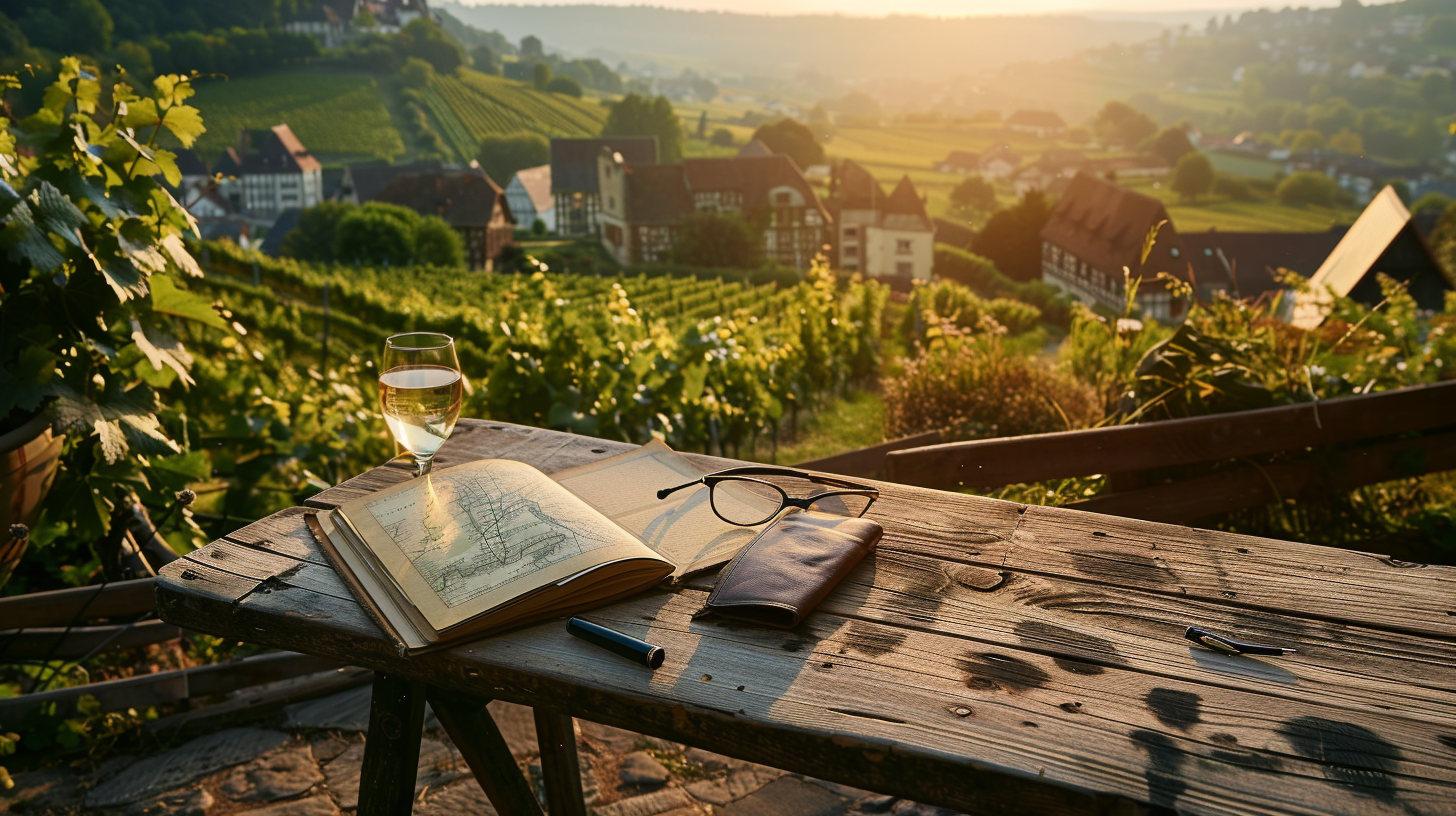
Beyond postcard landscapes lies Central Europe’s living history—a region of contested borders, monastic trade, and cultural synthesis. This 14-day field seminar traces the historical currents of southern Germany and northeastern France, moving purposefully from Munich’s civic brewing traditions to the remarkably intact medieval streetscapes of UNESCO-listed Regensburg.
Crossing into Alsace, we explore half-timbered wine villages where French and German identities seamlessly converge in language, architecture, and terroir. Designed for the intellectually curious, this slow-paced journey bypasses standard tourist routes to offer an intimate, scholar-led study of how geography and history continue to shape everyday regional life.
Tour Dates:
Late September – Early October
Ideal Group Size
10-12 Travellers
Tour Participants
The 14-Day-Bordelands Tour is ideal if you like history and culture, food, wine and beer traditions, walking through historical towns and villages, scenic landscapes, small-group travel, meaningful conversation and learning while travelling.
Signature Experiences:
Oktoberfest – Historic Bavarian beer halls – Weltenburg Abbey – Monastery brewery – Regensburg Cathedral – Strasbourg Cathedral – Alsace Wine Route – Vineyard tasting – Cooking class – Long-table regional dinner – Medieval villages -Local markets
The Borderlands Tour Itinerary

Munich: Monastic Roots, Public Health & The Social Architecture of Oktoberfest
Begin your expedition in the heart of Bavaria during Oktoberfest season—not as a conventional tourist, but as a scholar of place. Across three immersive days, trace Munich’s evolution from a medieval monastic settlement into a powerful ducal capital.
Through primary archival context, culinary history, and urban exploration, discover how early state craft, grain protection laws, and social architecture shaped modern Bavarian identity.
Historical & Cultural Significance:
As the historic seat of the Wittelsbach dynasty, Munich served for centuries as the political and counter-reformation stronghold of Southern Germany, balancing fiercely independent regional traditions against imperial and pan-German consolidation. Culturally, the city synthesized monastic agricultural traditions with state-level economic protectionism—most famously codified in the 1516 Reinheitsgebot—turning everyday culinary staples like bread and beer into foundational instruments of public health, social stability, and civic identity.
By institutionalizing public gathering spaces from the communal tables of historic beer halls to the grand scale of the Theresienwiese, Munich engineered a unique social architecture that bridged rigid socio-economic divides, establishing a vibrant tradition of civic conviviality (Gemütlichkeit) that continues to define Bavarian culture today.
Key Program Highlights & Points of Interest
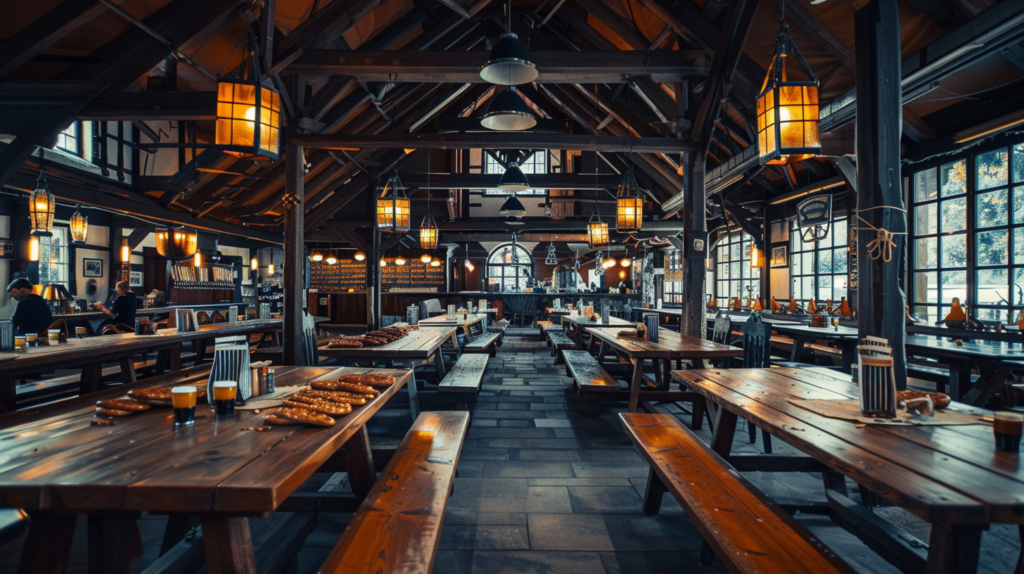
Monastic Foundations & Traditional Beer Hall Welcome: Gather for an opening seminar dinner in a historic beer hall. Examine how medieval religious orders developed brewing as “liquid bread” (Flüssiges Brot) during Lent, turning monastic cellars into early centers of zymology and sanitary hydration.
Old Town Historical Walking Seminar: Walk Munich’s historic core, dissecting Duke Wilhelm IV’s 1516 Reinheitsgebot (Beer Purity Law). Learn how this decree served as a masterclass in 16th-century agricultural protectionism—reserving wheat and rye for bread to prevent famine while outlawing toxic botanicals in brewing.
Optional Architectural Deep Dives: Visit Nymphenburg Palace or the Munich Residenz to explore Wittelsbach court architecture, royal patronage, and diplomatic history.
Evening at Oktoberfest: Step onto the Theresienwiese to experience the festival’s origins, which began with the 1810 royal wedding of Crown Prince Ludwig and Princess Therese. Examine the “democracy of the long table” (Stammtisch culture)—how shared wooden benches intentionally dissolve class divisions and engineer community solidarity.
Learning Outcomes for Stage 1:
- Deconstruct Early Modern Statecraft: Analyze the 1516 Reinheitsgebot as an economic policy that balanced grain conservation, public health defense, and state revenue.
- Evaluate Monastic Innovation: Understand the role of medieval religious orders as early hubs for technological advancement, sanitation, and record-keeping.
- Analyze Civic Spatial Design: Examine how communal seating arrangements in Bavarian beer halls engineered social cohesion across socio-economic classes.
Regensburg: Roman Foundations, Trade Engineering & Imperial Diplomacy
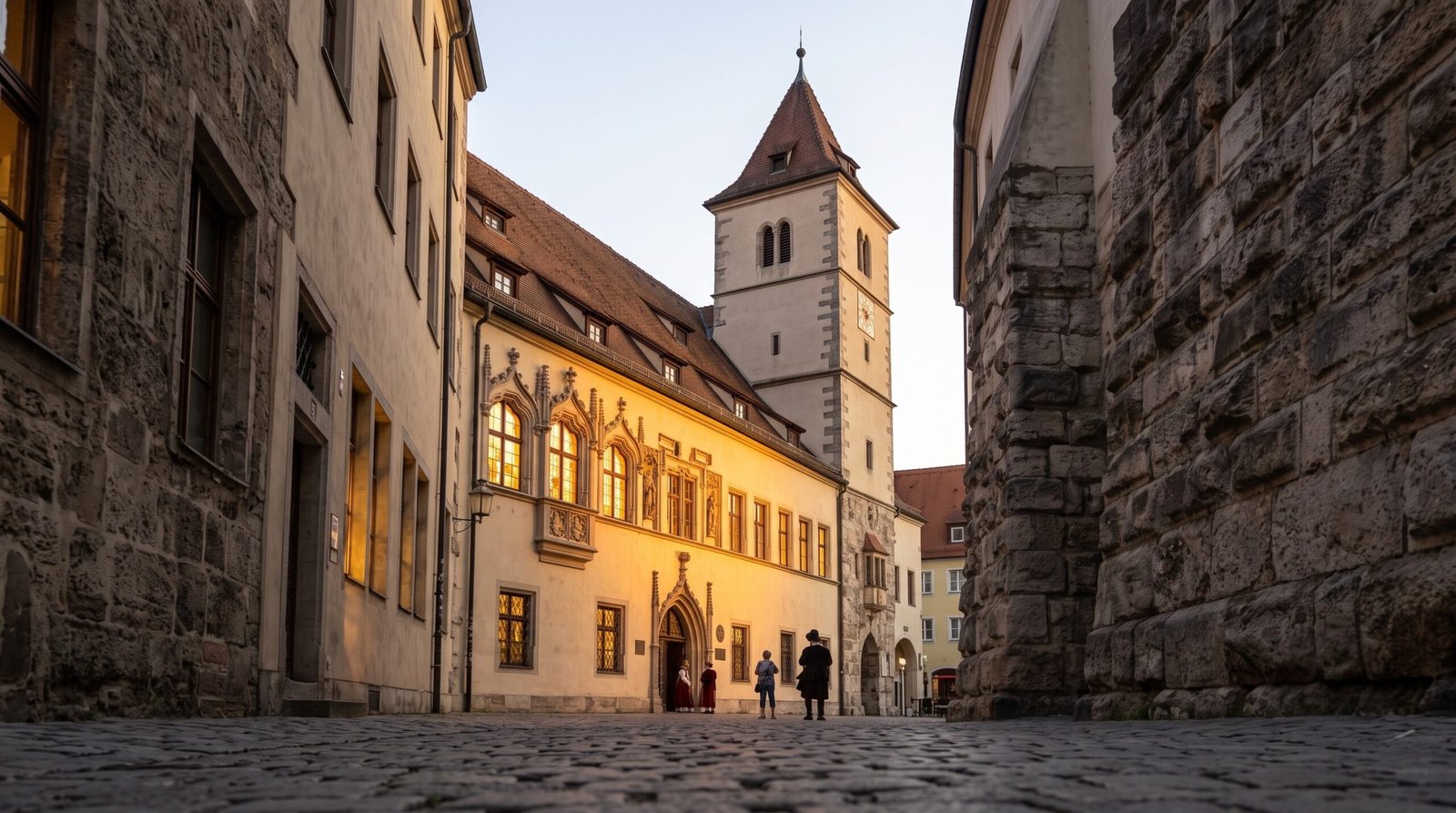
Journey along the Danube to Regensburg, Bavaria’s only fully intact medieval metropolis and a UNESCO World Heritage site.
Across three dedicated days, trace two millennia of urban stratigraphy—from Marcus Aurelius’s Roman legionary stronghold to the 12th-century merchant republic and the permanent parliament of the Holy Roman Empire.
Discover how civil engineering, European trade monopolies, and tactical wartime preservation built a living fortress of European heritage.
Historical & Cultural Significance:
Situated at the northernmost bend of the Danube River, Regensburg has historically served as one of Central Europe’s most critical geopolitical crossroads. As Castra Regina, it marked the fortified edge of the Roman frontier (Limes), before evolving in the Middle Ages into a dominant merchant republic whose 12th-century Stone Bridge held an 800-year monopoly on cross-Danube trade.
Beyond its economic power, Regensburg stood as the diplomatic nerve center of Europe from 1663 to 1806 as the permanent seat of the Perpetual Imperial Diet (Immerwährender Reichstag). Here, ambassadors, electors, and imperial envoys forged early modern international protocol, intelligence networks, and multilateral governance. Because it miraculously escaped major destruction during World War II, Regensburg remains an unparalleled living museum of European urban stratigraphy and civic autonomy.
Key Program Highlights & Points of Interest
Castra Regina & Roman Gateway Field Study: Walk the rectangular grid of the ancient Roman military camp (Castra Regina, built 179 AD). Inspect the massive 2nd-century ashlar masonry blocks of the Porta Praetoria, integrated directly into the medieval Bishop’s Court.
The Stone Bridge & Danube Trade Monopoly: Cross the 12th-century Stone Bridge (Steinerne Brücke)—a 300-meter medieval engineering marvel that provided the only permanent stone crossing of the Danube for over 800 years. Analyze how river tolls on salt, Venetian silks, and timber funded wealthy merchant families who erected Italianate tower-houses like the Goldener Turm.
Old Town Hall & The Perpetual Imperial Diet: Visit the Altes Rathaus to explore the Perpetual Imperial Diet (Immerwährender Reichstag), which met continuously in Regensburg from 1663 to 1806. Examine the Reichssaal (Imperial Chamber) where ambassadors, electors, and princes crafted early modern European diplomacy, intelligence networks, and international protocol.
Medieval Urban Core & Heritage Preservation Walk: Meander through narrow, cobblestoned alleys housing over 1,500 protected structures. Learn how industrial targeting on the city’s outskirts, tactical WWII surrender, and post-war municipal restoration saved Regensburg’s historic center from wartime destruction and modern urban redevelopment.
Danube Excursion: Take a river craft along the Danube to observe medieval river logistics, historic waterfront storehouses, and the surrounding Bavarian landscape.
Learning Outcomes for Stage 2:
- Deconstruct Urban Stratigraphy: Trace how Roman military infrastructure provided the physical foundations for medieval civic power and modern street layouts.
- Evaluate Civil Engineering as Political Economy: Assess how infrastructure like the 1135 Stone Bridge created trade monopolies, financed elite architectural competition, and fostered early European mercantile capitalism.
- Examine Early Diplomatic Systems: Deconstruct the spatial and political operations of the Perpetual Imperial Diet, comparing 17th-century parliamentary protocols to modern multilateral institutions.
- Critique Modern Conservation Models: Analyze how Regensburg successfully balanced strict UNESCO historical preservation standards with the functional demands of a modern university city.
Alsace: Geological Fractures, Guild Governance & Frontier Terroir
Cross the Rhine into Alsace, one of Europe’s most geologically complex and historically contested borderlands. Across four immersive days, explore how this narrow corridor between the Vosges Mountains and the Rhine River shifted between French and German sovereignty four times since 1871 alone.
Trace how 2,000 years of viticulture served as the primary economic foundation of the region, shaping medieval guild governance, international Rhine trade networks, and a distinct hybrid Franco-German cultural identity.
Historical & Cultural Significance:
Positioned along the tectonic fracture of the Rhine Graben, Alsace stands as the quintessential European frontier—a fertile, highly contested corridor where Germanic and Latin worlds continually intersected, collided, and synthesized. Having changed national sovereignty four times between 1871 and 1945 alone, the region developed a resilient, highly distinct hybrid culture that combines Germanic civic organization and architectural forms with French gastronomic philosophy and legal traditions.
At the heart of this identity lies a two-thousand-year viticultural heritage: medieval wine guilds (Corporations de Vignerons) leveraged the wealth of the Rhine trade to secure municipal independence for fortified towns, creating a unique socio-economic landscape where agricultural terroir, guild governance, and frontier diplomacy are inextricably linked.
Key Program Highlights & Points of Interest
Vosges Rain Shadow & Geological Soil Mosaic: Field study across the upper Rhine Graben to observe the tectonic collapse that created a “mosaic of soils” (marl, limestone, granite, schist, and volcanic sandstone). Analyze how the Vosges rain shadow creates one of France’s driest, sunniest microclimates for grape growing.
Medieval Riquewihr & Hunawihr Architectural Walk: Examine remarkably intact 16th-century timber-framed wine merchant houses, double-fortified civic walls, and historic courtyard presses (spitzen). Learn how wine wealth funded civic autonomy during the Holy Roman Empire.
Guild Systems & Corporations de Vignerons: Dissect the medieval winemakers’ guilds in Colmar, exploring early laws regulating harvest dates (ban des vendanges) and quality control standards along the Rhine trade routes.
Unterlinden Museum & Cultural Integration: Visit Colmar’s iconic museum to view the Isenheim Altarpiece, investigating how late medieval religious art, agrarian cycles, and viticulture intersected in Rhineland culture.
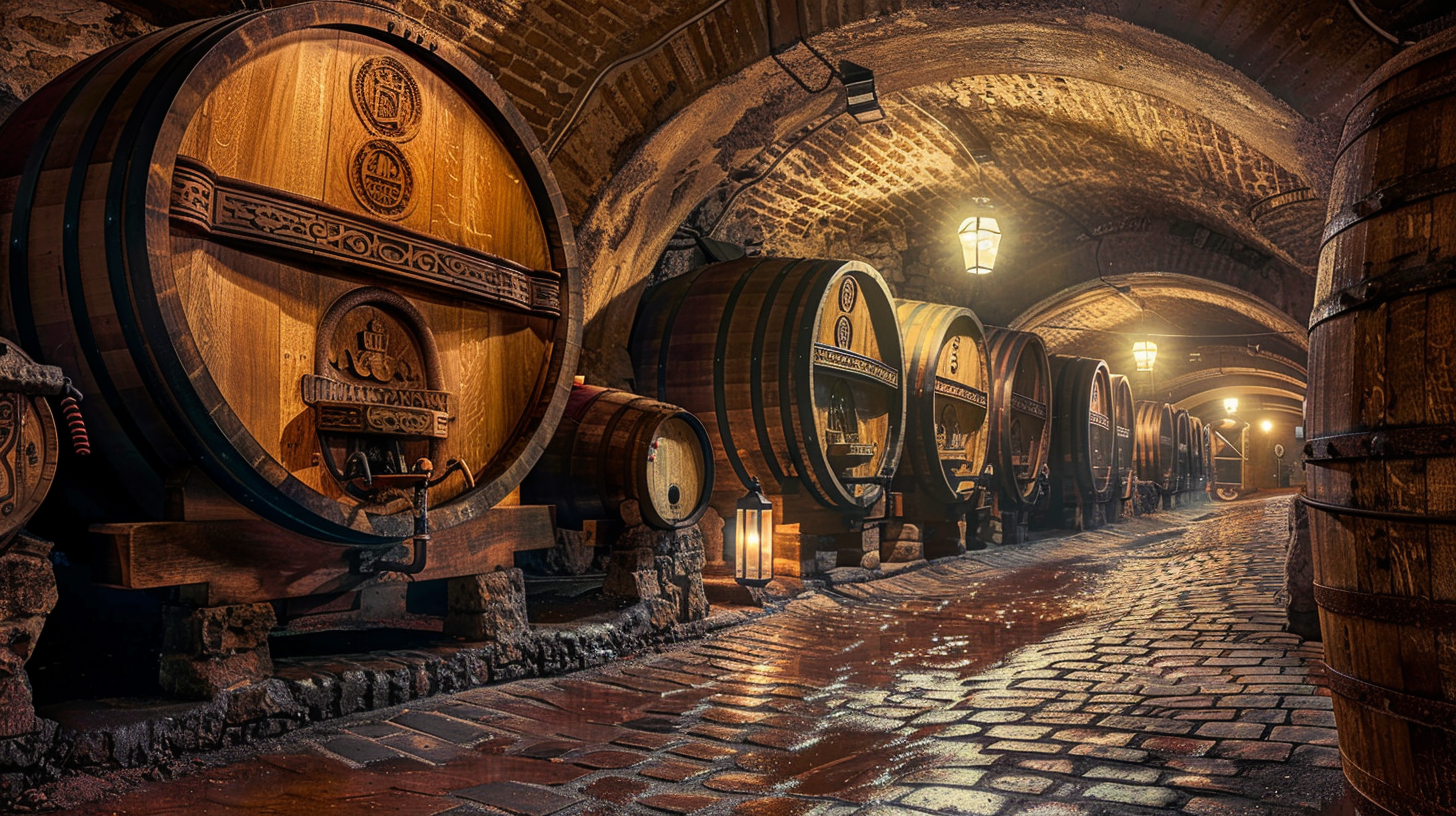
Cave Historique des Hospices de Strasbourg: Tour Strasbourg’s 1395 civil hospital cellar, where wine served as currency, medicine, and tax payment. Inspect the world’s oldest barreled wine (1472) while examining Strasbourg’s role as a historic Rhine port and modern European capital.
Learning Outcome for Stage 3:
- Explain Tectonic Micro-Terroirs: Analyze how the geological collapse of the Rhine Graben 35 million years ago created a unique “soil mosaic” (granite, schist, marl, limestone) and a Vosges rain-shadow microclimate that directly dictates agricultural output and settlement history.
- Evaluate Guild Power in Borderland Economies: Assess how medieval winemakers’ guilds (Corporations de Vignerons) utilized Rhine trade monopolies, harvest regulations (ban des vendanges), and barrel-marking laws to secure municipal autonomy for fortified towns like Riquewihr and Colmar.
- Trace Agricultural Resilience Across Geopolitical Shifts: Evaluate how Alsatian viticulture adapted to competing French and German legal, tax, and economic regimes across four national sovereignty shifts between 1871 and 1945.
- Analyze Hybrid Cultural Synthesis: Critique how regional culinary, architectural, and viticultural traditions serve as living artifacts of a hybrid borderland identity, synthesizing Germanic agricultural discipline with French gastronomic philosophy.
Concluding in Alsace (Base Itinerary)
After a final breakfast in Strasbourg on Day 13, guests departing for the US will transfer to the airport or rail station for international return flights (arriving home on Day 13 or 14 depending on flight schedules).
Prefer to linger a little longer? Elevate your journey with our curated finale below.
Extend Your Stay: The Paris Post-Tour Experience (2–3 Additional Days)
Why rush home when the heart of France is just a 2-hour TGV train ride away?
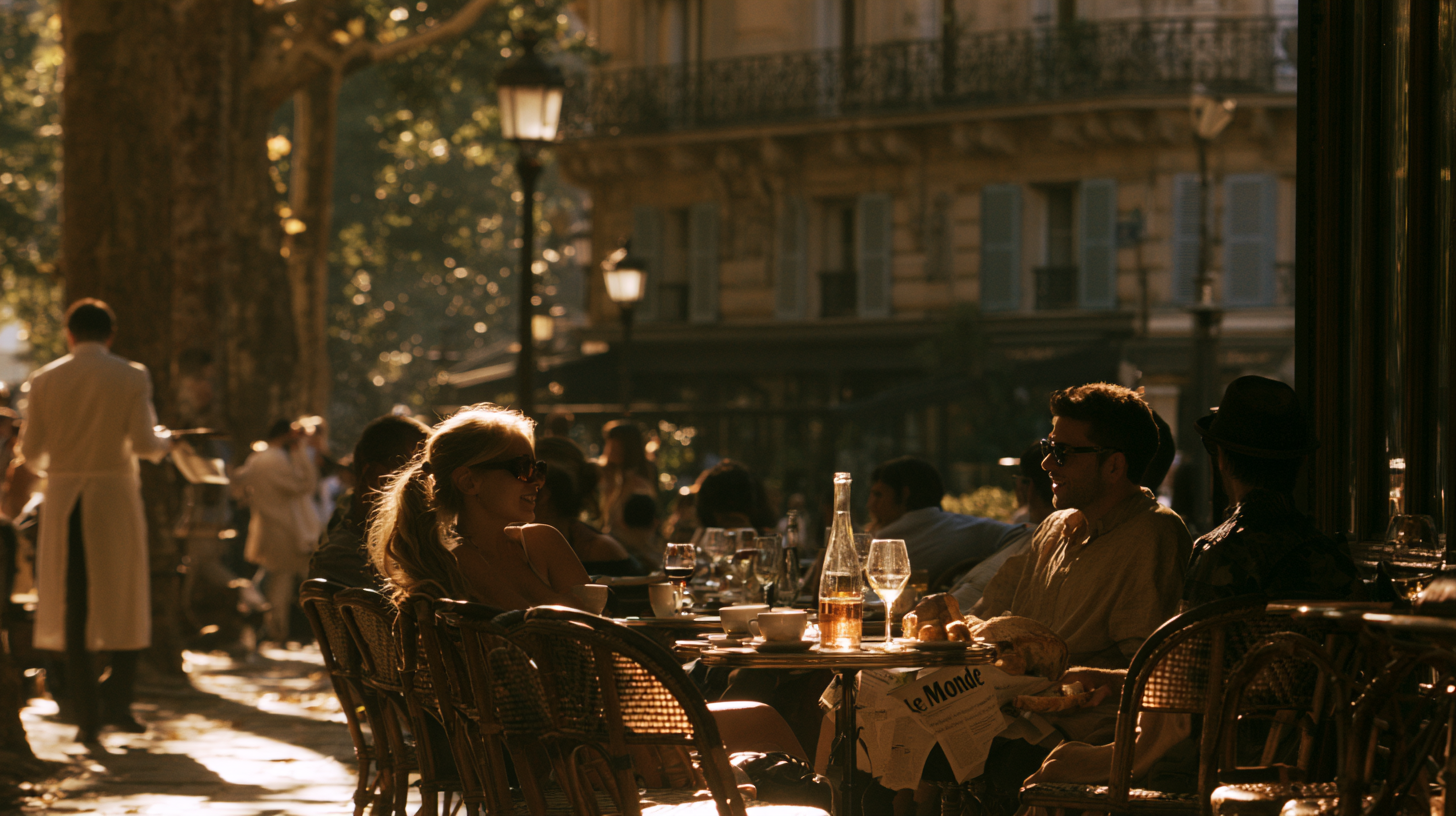
We’ve designed an optional Paris extension created specifically for those who wish to ease back into reality at a leisurely, thoughtful pace. This isn’t a whirlwind tour of crowded tourist traps; it is an invitation to savor Paris through its legendary neighborhoods, intimate bistros, and storied café culture.
How You’ll Spend Your Extra Days in Paris:
• Charming Quarters: Settle into a boutique hotel in Le Marais or the Left Bank, stepping right out your front door into cobblestone streets. • Art & Culinary Discovery: Morning browsing at a bustling local food market, followed by an unhurried afternoon at the Musée d’Orsay. • Café Culture & Tastings: Linger over espresso at historic literary haunts and enjoy a private natural wine tasting with a local expert. • The Final Toast: Rejoin fellow extension guests for a festive, intimate farewell dinner at a favorite neighborhood bistro.
Flight Logistics: Adding the extension lets you conveniently book nonstop return flights departing directly from Paris (CDG).
Space on the Paris Extension is limited to maintain an intimate group size. Inquire upon booking to secure your spot.
For Full Tour Information Pack
Deep dive into everything we have to offer with our ultimate subscriber pack.
Find Out More Today
Uncovering the Cultural Layers of Alsace, Regensburg, and Bavaria
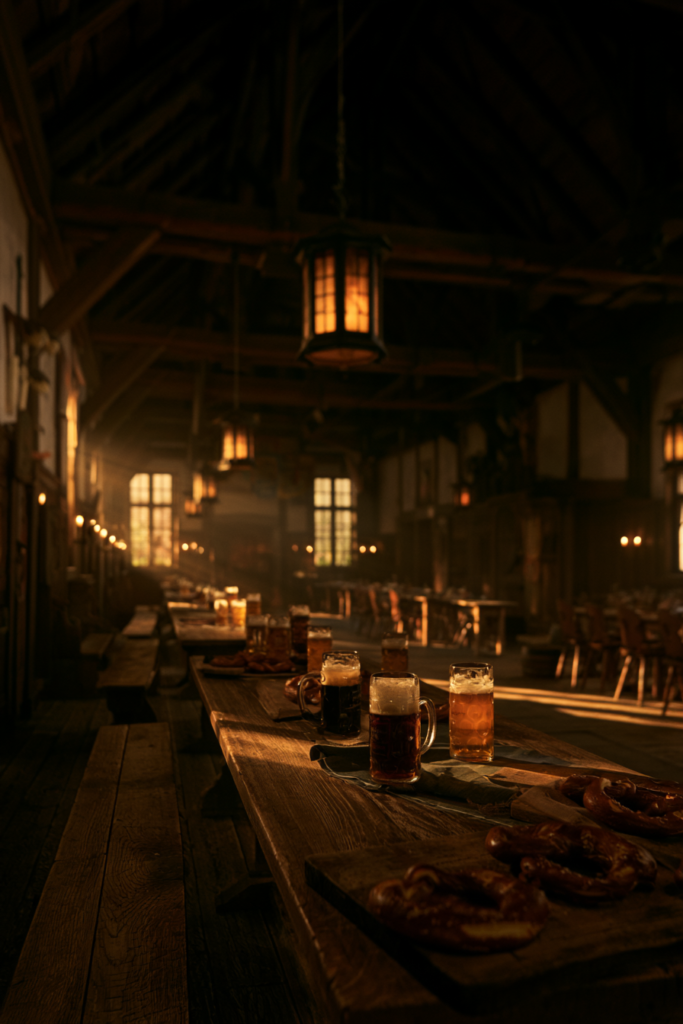
How Munich’s Monastic Roots and Beer Guilds Built Bavarian Identity
Day 1 – 3: Discover how medieval monastic brewing, public health defenses, and Duke Wilhelm IV’s 1516 Reinheitsgebot transformed Bavarian beer into a masterclass in agricultural protectionism, statecraft, and social architecture along the long wooden tables of Munich’s historic beer halls.
View Post →
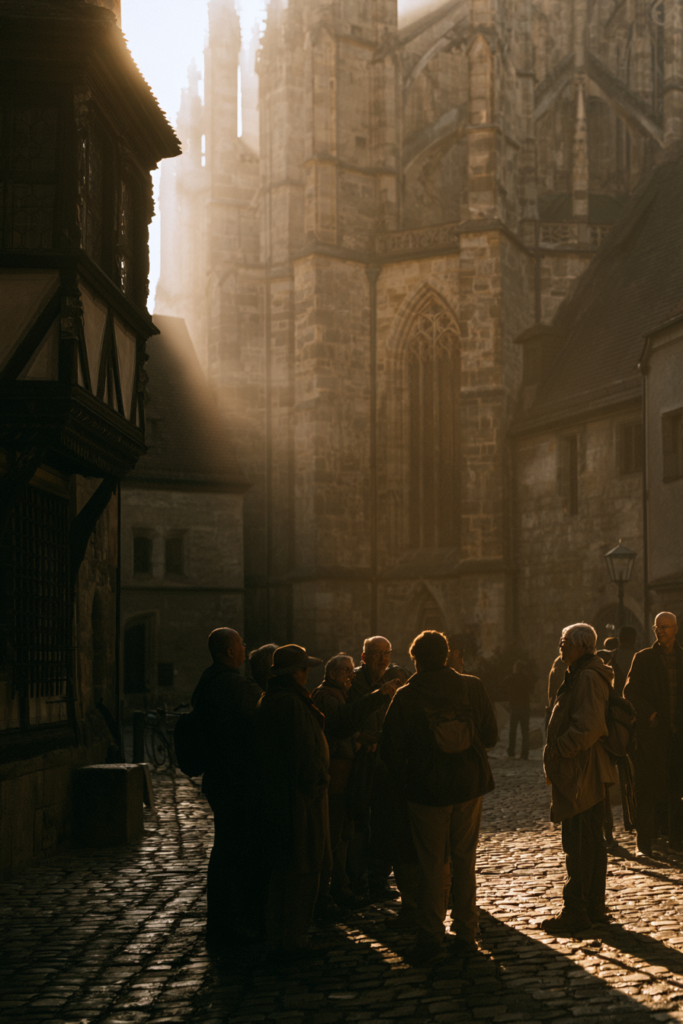
How Regensburg Preserved Europe’s Intact Medieval Heart
Day 4-7: Explore Germany’s only intact medieval metropolis, where Marcus Aurelius’s Roman fortress foundations, the 12th-century Stone Bridge, and the 1663 Perpetual Imperial Diet built a resilient sanctuary of trade monopolies, merchant towers, and early modern European diplomacy.
View Post →
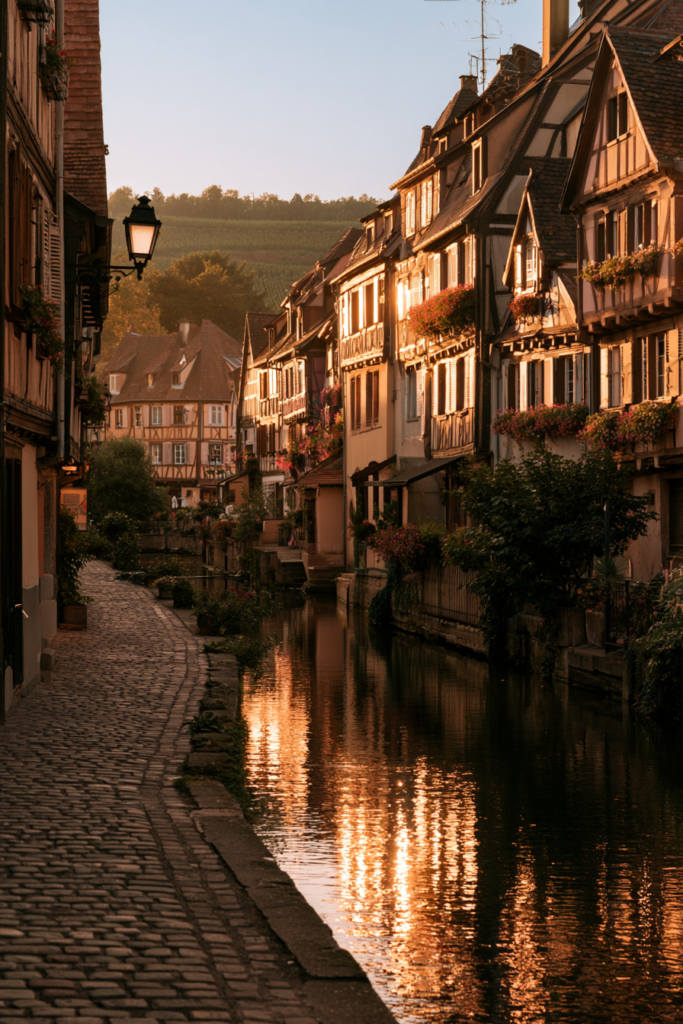
The Alsace Wine Route & Borderland Terroir
Day 8-12: Uncover how 2,000 years of viticulture, tectonic geology, and medieval guild governance sustained Alsace through centuries of Franco-German conflict, turning a contested borderland into a celebrated landscape of Grand Cru terroirs and enduring cultural hybridity.
View Post →
Premium / Experience-Focused
Every Detail Managed, Every Need Covered
Luggage Porterage & Transfers
Lorem ipsum dolor sit amet, consectetur adipiscing elit, sed do eiusmod tempor incididunt ut labore et dolore magna aliqua.
Accessibility & Walking Guidance
Lorem ipsum dolor sit amet, consectetur adipiscing elit, sed do eiusmod tempor incididunt ut labore et dolore magna aliqua.
Pre-Departure Syllabus & Field Reader
Lorem ipsum dolor sit amet, consectetur adipiscing elit, sed do eiusmod tempor incididunt ut labore et dolore magna aliqua.
Whisper Audio Headset Systems
Lorem ipsum dolor sit amet, consectetur adipiscing elit, sed do eiusmod tempor incididunt ut labore et dolore magna aliqua.
24/7 On-Call Medical Assistance
Lorem ipsum dolor sit amet, consectetur adipiscing elit, sed do eiusmod tempor incididunt ut labore et dolore magna aliqua.
Dietary & Gastronomic Accommodations
Lorem ipsum dolor sit amet, consectetur adipiscing elit, sed do eiusmod tempor incididunt ut labore et dolore magna aliqua.
Comprehensive Travel Insurance Support
Lorem ipsum dolor sit amet, consectetur adipiscing elit, sed do eiusmod tempor incididunt ut labore et dolore magna aliqua.
Boutique Single & Twin Rooming
Lorem ipsum dolor sit amet, consectetur adipiscing elit, sed do eiusmod tempor incididunt ut labore et dolore magna aliqua.
Borderlands Tour FAQs
Felis nec elementum gravida, curabitur amet eleifend, volutpat ipsum cras eu quam molestie tempus. Himenaeos fusce per posuere, non pharetra ad, gravida hendrerit magna conubia eleifend ornare. Nullam purus, aenean imperdiet convallis massa. Commodo convallis id, fringilla tristique vitae venenatis. Metus purus turpis ultrices, aliquam inceptos
Felis nec elementum gravida, curabitur amet eleifend, volutpat ipsum cras eu quam molestie tempus. Himenaeos fusce per posuere, non pharetra ad, gravida hendrerit magna conubia eleifend ornare. Nullam purus, aenean imperdiet convallis massa. Commodo convallis id, fringilla tristique vitae venenatis. Metus purus turpis ultrices, aliquam inceptos tellus porttitor cubilia. Cursus dictum et, feugiat tempor, at malesuada cubilia mattis sociosqu lorem.
Felis nec elementum gravida, curabitur amet eleifend, volutpat ipsum cras eu quam molestie tempus. Himenaeos fusce per posuere, non pharetra ad, gravida hendrerit magna conubia eleifend ornare. Nullam purus, aenean imperdiet convallis massa. Commodo convallis id, fringilla tristique vitae venenatis. Metus purus turpis ultrices, aliquam inceptos tellus porttitor cubilia. Cursus dictum et, feugiat tempor, at malesuada cubilia mattis sociosqu lorem.
Felis nec elementum gravida, curabitur amet eleifend, volutpat ipsum cras eu quam molestie tempus. Himenaeos fusce per posuere, non pharetra ad, gravida hendrerit magna conubia eleifend ornare. Nullam purus, aenean imperdiet convallis massa. Commodo convallis id, fringilla tristique vitae venenatis. Metus purus turpis ultrices, aliquam inceptos tellus porttitor cubilia. Cursus dictum et, feugiat tempor, at malesuada cubilia mattis sociosqu lorem.
Felis nec elementum gravida, curabitur amet eleifend, volutpat ipsum cras eu quam molestie tempus. Himenaeos fusce per posuere, non pharetra ad, gravida hendrerit magna conubia eleifend ornare. Nullam purus, aenean imperdiet convallis massa. Commodo convallis id, fringilla tristique vitae venenatis. Metus purus turpis ultrices, aliquam inceptos tellus porttitor cubilia. Cursus dictum et, feugiat tempor, at malesuada cubilia mattis sociosqu lorem.
Felis nec elementum gravida, curabitur amet eleifend, volutpat ipsum cras eu quam molestie tempus. Himenaeos fusce per posuere, non pharetra ad, gravida hendrerit magna conubia eleifend ornare. Nullam purus, aenean imperdiet convallis massa. Commodo convallis id, fringilla tristique vitae venenatis. Metus purus turpis ultrices, aliquam inceptos
Felis nec elementum gravida, curabitur amet eleifend, volutpat ipsum cras eu quam molestie tempus. Himenaeos fusce per posuere, non pharetra ad, gravida hendrerit magna conubia eleifend ornare. Nullam purus, aenean imperdiet convallis massa. Commodo convallis id, fringilla tristique vitae venenatis. Metus purus turpis ultrices, aliquam inceptos tellus porttitor cubilia. Cursus dictum et, feugiat tempor, at malesuada cubilia mattis sociosqu lorem.
Felis nec elementum gravida, curabitur amet eleifend, volutpat ipsum cras eu quam molestie tempus. Himenaeos fusce per posuere, non pharetra ad, gravida hendrerit magna conubia eleifend ornare. Nullam purus, aenean imperdiet convallis massa. Commodo convallis id, fringilla tristique vitae venenatis. Metus purus turpis ultrices, aliquam inceptos tellus porttitor cubilia. Cursus dictum et, feugiat tempor, at malesuada cubilia mattis sociosqu lorem.
Felis nec elementum gravida, curabitur amet eleifend, volutpat ipsum cras eu quam molestie tempus. Himenaeos fusce per posuere, non pharetra ad, gravida hendrerit magna conubia eleifend ornare. Nullam purus, aenean imperdiet convallis massa. Commodo convallis id, fringilla tristique vitae venenatis. Metus purus turpis ultrices, aliquam inceptos tellus porttitor cubilia. Cursus dictum et, feugiat tempor, at malesuada cubilia mattis sociosqu lorem.
Felis nec elementum gravida, curabitur amet eleifend, volutpat ipsum cras eu quam molestie tempus. Himenaeos fusce per posuere, non pharetra ad, gravida hendrerit magna conubia eleifend ornare. Nullam purus, aenean imperdiet convallis massa. Commodo convallis id, fringilla tristique vitae venenatis. Metus purus turpis ultrices, aliquam inceptos tellus porttitor cubilia. Cursus dictum et, feugiat tempor, at malesuada cubilia mattis sociosqu lorem.
contact us
Let’s discuss your next journey into history.
Great field seminars begin with a good conversation. Have questions about our upcoming itineraries, regional deep-dives, or group bookings? Get in touch with our team—we are always happy to share insights and help craft your perfect learning experience.

info@scholasticexpeditions.org

(831) 440-1041

5610 Scotts Valley Drive #313
Scotts Valley, CA 95066